The Basics of Food Safety

The Basics of Food Safety

Whether you're a home cook, a restaurant owner, or just someone who enjoys a good meal, understanding and implementing food safety practices is paramount. This page is designed to equip you with essential information, tips, and resources to ensure that the food you prepare and consume is safe, wholesome, and free from harmful contaminants. 

The Basics of Food Safety 

A graphic with the title “What are the symptoms of foodborne illness?” at the top. Below, a simple outline of a human figure is shown with labeled lines pointing to symptom locations. Symptoms listed include fever, nausea and vomiting, dehydration, upset stomach, cramps, and diarrhea.

Safe Food Handling Practices 

  • Hand Hygiene: Understand the importance of proper handwashing techniques to prevent cross-contamination. 
  • Cleaning and Sanitizing: Learn how to effectively clean and sanitize kitchen surfaces, utensils, and equipment. 
  • Proper Food Storage: Get tips on storing perishable and non-perishable foods to maintain their quality and safety. 
  • Avoiding Cross-Contamination: Learn strategies to prevent the transfer of harmful microorganisms between different foods. 


Resources and Further Reading 

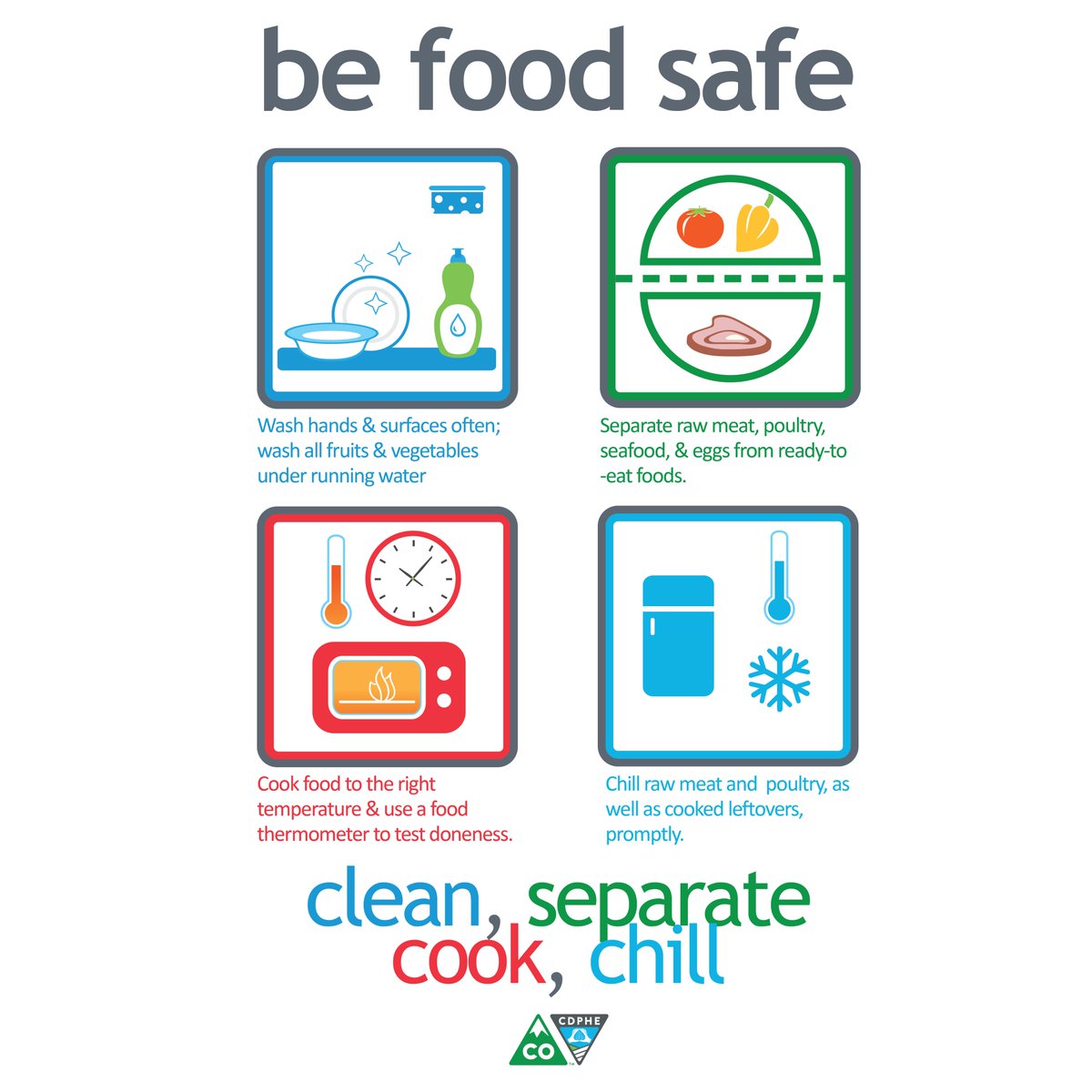
A graphic titled “be food safe” with four illustrated safety icons. The first icon shows dishes, soap, and running water with the message to wash hands and surfaces often. The second icon shows raw foods separated from ready‑to‑eat foods. The third icon shows a thermometer, clock, and cooking device with a message to cook food to the right temperature. The fourth icon shows a refrigerator and snowflake with a message to chill raw meat and cooked leftovers promptly. The words “clean, separate, cook, chill” appear at the bottom in colorful text.

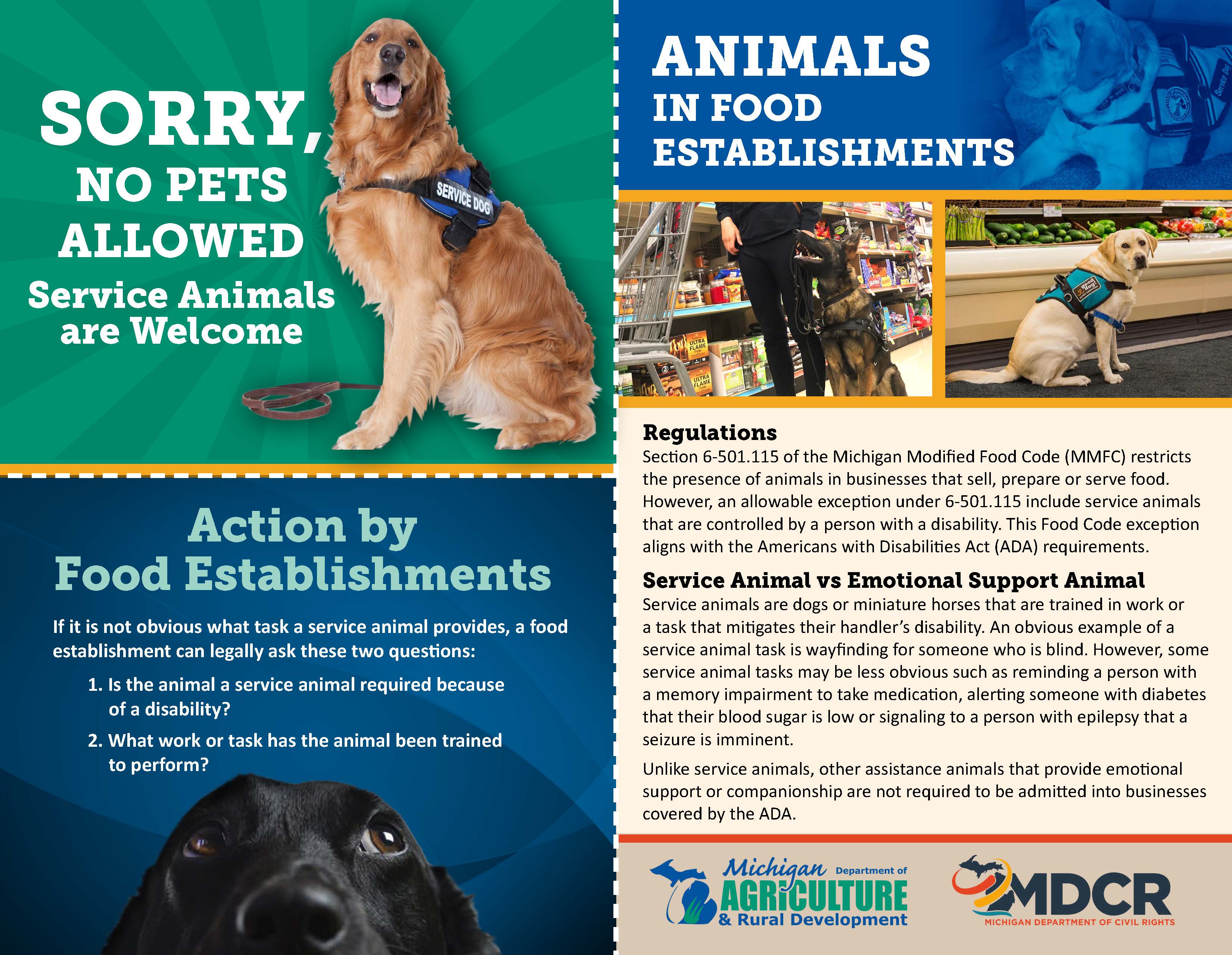
A flyer with multiple sections about animals in food establishments. The top left shows a large photo of a dog wearing a vest labeled “Service Dog” with text that reads “Sorry, no pets allowed. Service animals are welcome.” The right side includes two smaller photos: one of a person in a grocery store with a service animal wearing a vest, and another of a service animal sitting in a produce aisle. Below, the flyer includes text about regulations, service animals, emotional support animals, and actions food establishments may take. Logos for the Michigan Department of Agriculture & Rural Development and the Michigan Department of Civil Rights appear at the bottom.    


Prioritizing food safety is not only a responsible practice but a commitment to the health and well-being of yourself and those you serve. By following the guidelines and tips outlined in this guide, you're taking a crucial step towards enjoying meals that are not only delicious but also safe. 


Benzie Office

6051 Frankfort Hwy , Ste 100
Benzonia, MI   49616

Office Hours
Monday-Friday
8am-12pm and 1pm-4:30pm

Phone: (231) 882-4409 (231) 882-4409
Fax: (231) 882-2204

Leelanau County
Health Services

7401 E Duck Lake Rd., Ste 100
Lake Leelanau, MI 49653

Office Hours
Monday-Friday
8am-12pm and 1pm-4:30pm

Phone: (231) 256-0200(231) 256-0200
Fax: (231) 882-0143

Leelanau County
Environmental Services

8527 E. Government Center Dr. Suite LL-007
Suttons Bay, MI 49682

Office Hours
Monday-Friday
8am-12pm and 1pm-4:30pm

Phone: (231) 256-0201(231) 256-0200
Fax: (231) 256-0225

Subscribe to our eNews

* indicates required
For Media Contacts

Please direct all media inquiries to:
Rachel Pomeroy, Public Information Officer
Phone: 231-882-6085
bldhd@bldhd.org


MIChild, Healthy Kids, Healthy Michigan Plan

Free or low-cost health insurance for families. We can help you apply!  
Call 1-833-674-2159 or apply online at MI Bridges